


What is a Cataract?
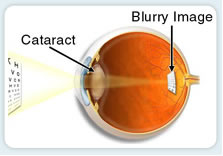
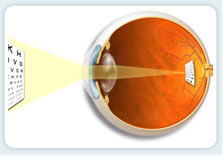
The lens of the eye plays an important role in our ability to see clearly. Situated behind the iris and pupil, it works to focus light onto the retina to produce clear, sharp images. As we age, the lens begins to cloud causing a decrease in visual function. This clouding of the eye’s lens is called a cataract.
The formation of cataracts is a common part of the aging process that affects more than half of Americans 65 or older. Cataracts can also form at younger ages as a result of hereditary conditions, eye or head trauma, the use of certain medications, and some medical conditions (i.e. diabetes). Fortunately, thanks to modern treatment techniques, cataract surgery is extremely safe and effective. It is also the most common surgical procedure performed, with approximately six million procedures performed in the world and three million performed in the U.S. each year.

Cataract Symptoms
Cataracts usually form slowly. The following are some of the first symptoms patients typically notice:
- Vision is blurred, hazy, cloudy, filmy, or foggy
- Glare and halos appear around lights (i.e. headlights from oncoming traffic)
- Colors seem duller or different than usual
- Vision changes (frequent changes recommended in eye glasses prescription)
- Difficulty reading road signs and driving at night
Contact our eye doctors if you have experienced any of the symptoms listed above.
Diagnosis and Prevention
Diagnosis
During an exam, our eye doctors will test your vision and will dilate your pupil in order to examine the condition of your lens and other parts of your eye. If cataracts are detected, our experienced team will educate you about your treatment options. Our doctors will recommend cataract surgery when it appears to affect your lifestyle. However, the decision to proceed with cataract surgery is ultimately yours.
Can cataracts be prevented?
Though there is no proven way to prevent cataracts, there are certain factors that are linked to their formation. These include:
- Eye injuries
- Alcohol abuse
- Smoking
- Certain medications (including diuretics and corticosteroids)
- Diseases (such as diabetes)
- Long-term exposure to toxic substances, ultraviolet light, or radiation
ORA-Guided Advanced Cataract Surgery
ORA-Guided Advanced Cataract Surgery incorporates technologies that can increase the accuracy of the procedure and lead to better results. Not only can you regain clear vision, but you may be able to enjoy the crisp, vibrant vision you had when you were younger.
With ORA-Guided Advanced Cataract Surgery, your surgeon can take exact measurements of your eye allowing him to tailor the procedure to you and refine your visual outcome. No stitch, no needle, just your best possible results.
Frequently Asked Questions
How will ORA enhance my premium cataract procedure?
By providing detailed measurements of your eye, ORA helps your surgeon tailor treatment to your individual needs.
How effective is ORA-Guided Cataract Surgery?
Compared to traditional cataract procedures, ORA-guided cataract surgery is proven to significantly improve your visual outcome.
Does ORA-Guided Cataract Surgery take longer than regular cataract surgery?
ORA adds a small amount of additional time to your procedure, but the extra time is well worth it when considering the enhanced outcome it can provide.
The Cataract Surgery Procedure
Cataract surgery is considered one of the safest surgical procedures performed today. Recent advances in technology and technique have made it gentler and more reliable than ever. Cataract surgery can be completed on an outpatient basis in about 15-20 minutes. Recovery from surgery is often accomplished in a short period of time, depending on the health of the eye at the time of surgery. All cataract surgery is not created equal. The surgeons at the Parschauer Eye Center utilize a highly sophisticated cataract surgery technique that usually requires no-needles, no-stitches, no-patch and no post-operative drops. We are one of few practices nationwide that has streamlined these advances into one technique. We believe that by simplifying the cataract surgery, our patients are happier, achieve better results, and have a faster recovery.
The following five steps describe the process you will undergo when receiving cataract surgery:
Step 1: Preparation of the Eye
To ensure that cataract surgery is as comfortable as possible, several forms of anesthesia are used. First, gentle IV sedation is administered to help you relax. Then, topical anesthesia bathes and numbs the surface of the eye, while the intraocular medication, Xylocaine, eliminates all sensation inside of the eye.
Step 2: Self-Sealing Incision Made
Once the eye is completely numb, your surgeon will create a tiny (less than 3.0 mm long), “self-sealing” incision that allows the eyes to heal without stitches in the majority of cases. The incision remains sealed because the eye’s internal pressure holds the incision tightly closed.
Step 3: Cataract Removal
Cataracts form inside of the lens capsule, which is like an elastic bag that holds the lens in place. To remove the cataract, the surgeon carefully opens the front portion of the lens capsule. Next, the cataract is gently dissolved with ultrasonic vibrations (phacoemulsification) and then removed from the lens capsule.
Step 4: IOL Replaces Cloudy Lens
After the cataract has been completely removed, an intraocular lens (IOL) is implanted in place of the natural lens inside the lens capsule. This allows light to focus on the retina, resulting in clearer vision. There are many types of lens implants that can be placed in the eye. These implants can correct a wide range of pre-existing vision problems, including farsightedness, nearsightedness, and astigmatism.
Step 5: Antibiotics and Anti-inflammatory Medicine Placed in the Eye
Before your surgery is complete, antibiotics and anti-inflammatory medicine will be placed inside your eye. The antibiotics will reduce your risk of infection, while the anti-inflammatory medicine will promote healing. The intraocular medicine will lessen your need for post-operative eye drops, which can be difficult for many individuals to place into the eye.
Lens Implant Options
Monofocal Lens
This is the traditional lens implant used in cataract surgery. This lens type has one focusing plane; your surgeon will choose a lens power which focuses at one of the following:
Distance-Greater than 20 feet
Intermediate-Computer
Near-Reading
With this type of lens you will need glasses to see well at the other points of focus.
Mono-Vision
Mono-vision is when a monofocal lens for distance vision is placed in one eye, and a monofocal lens for near vision is placed in the other eye. This can allow for much reduced dependence on glasses for a majority of daily activities. Studies have shown that mono-vision is well tolerated by 80% of patients. There may still be a need for glasses for some activities such as night driving and prolonged reading.
Panoptix Lens
Additional details coming soon.
Lifestyle Lenses
Lifestyle lenses are premium implants utilizing the latest technology to provide patients with a range of vision, from distance to near. These lenses provide the best opportunity for spectacle-free vision after surgery. If you are interested in lifestyle lenses, please take time to mention this to your surgeon.
Toric Lens (for astigmatism)
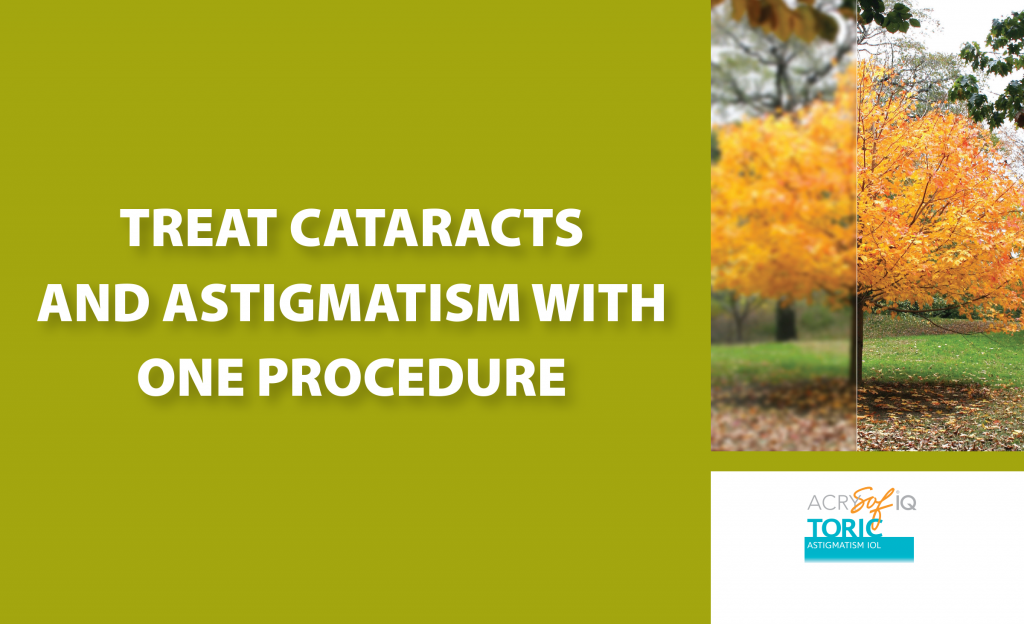
Patients with high amounts of astigmatism are much more spectacle dependent after their cataract surgery. This implant is a monofocal lens that has built-in astigmatism correction. By implanting this lens, post-operative dependence on glasses is reduced.
Lower levels of astigmatism can also be reduced by a limbal relaxing incision (LRI) procedure. This can be incorporated with your cataract surgery to help reduce your dependency on glasses.
Multifocal lenses:
TECNIS® intraocular lenses provide high-quality vision in any light condition. TECNIS® lenses are designed to give good vision both up-close and at a distance by reducing spherical aberrations of the eye’s cornea and lens. Nearly 9 out of 10 patients do not need glasses after the procedure.