Laser Refractive Surgery
Parschauer Eye Center has been performing state-of-the-art excimer laser refractive surgery in the Sandusky, Ohio; Northwest Ohio; and the Northern Ohio area since 1995. We have gathered a staff of highly experienced professionals who provide the highest quality evaluations and care to the people of these communities.
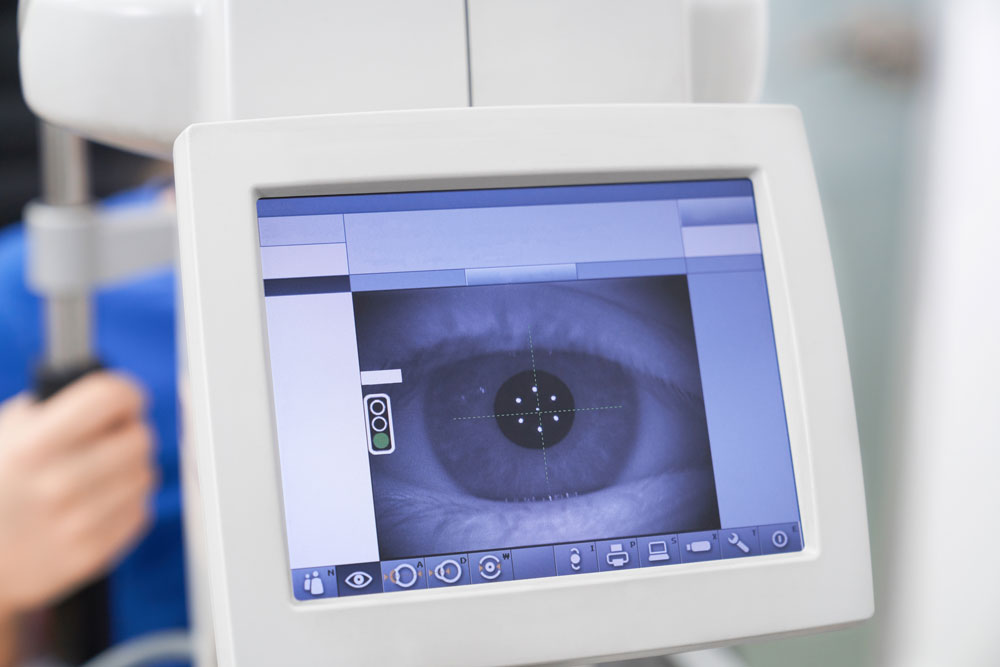
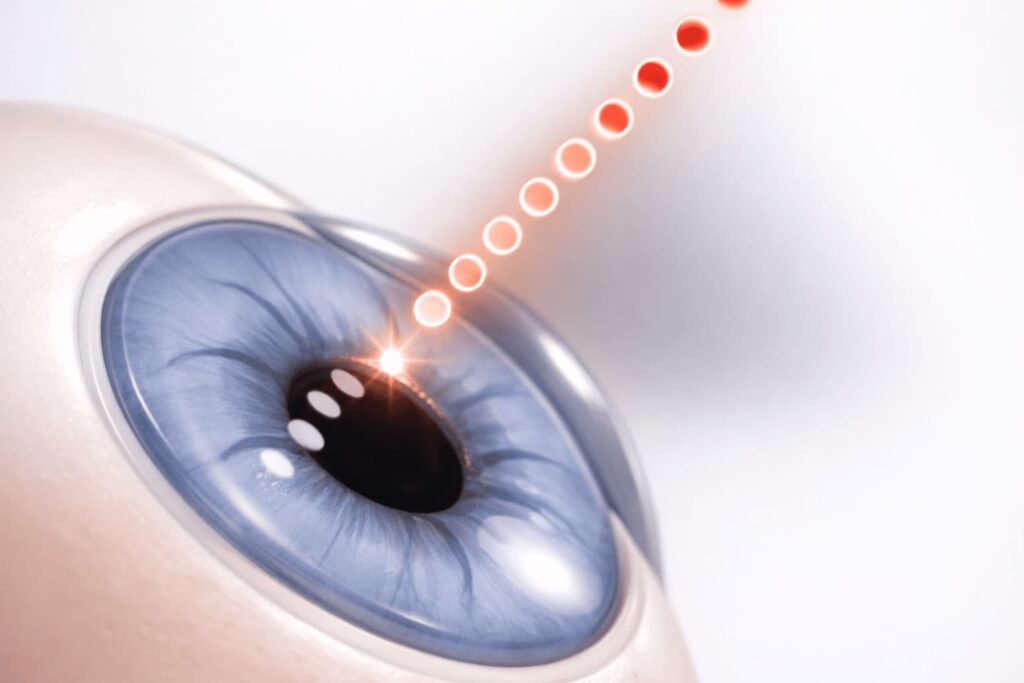
The excimer (short for EXcited dIMER) laser is the current cutting-edge technology used to change the shape of the cornea (the front window of the eye) to reduce dependence on glasses and contact lenses. Sandusky LASIK, Parschauer Eye Center, currently employs the VISX S4 excimer laser system which is widely considered the platform of choice by refractive surgeons around the country.
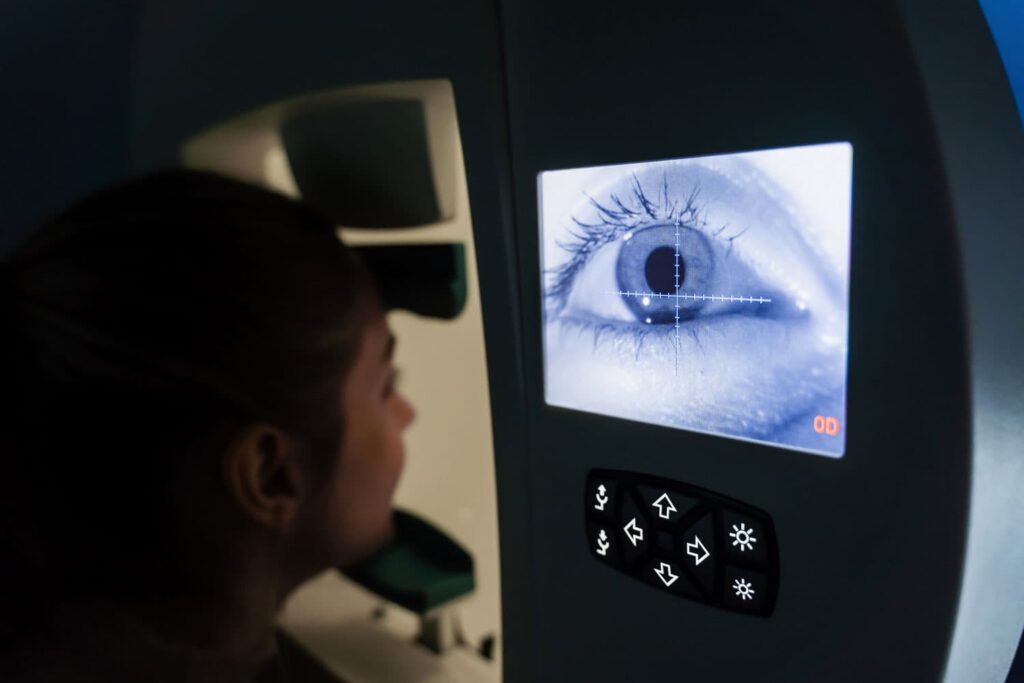
Together with your surgeon, you will have the opportunity to help determine the type of surgical approach that best suits your occupation, your hobbies, and your personalized needs. With our LASIK options, and by paying strict attention to detail, we at Sandusky LASIK, Parschauer Eye Center, are able to create a customized approach to your vision needs.
LASIK
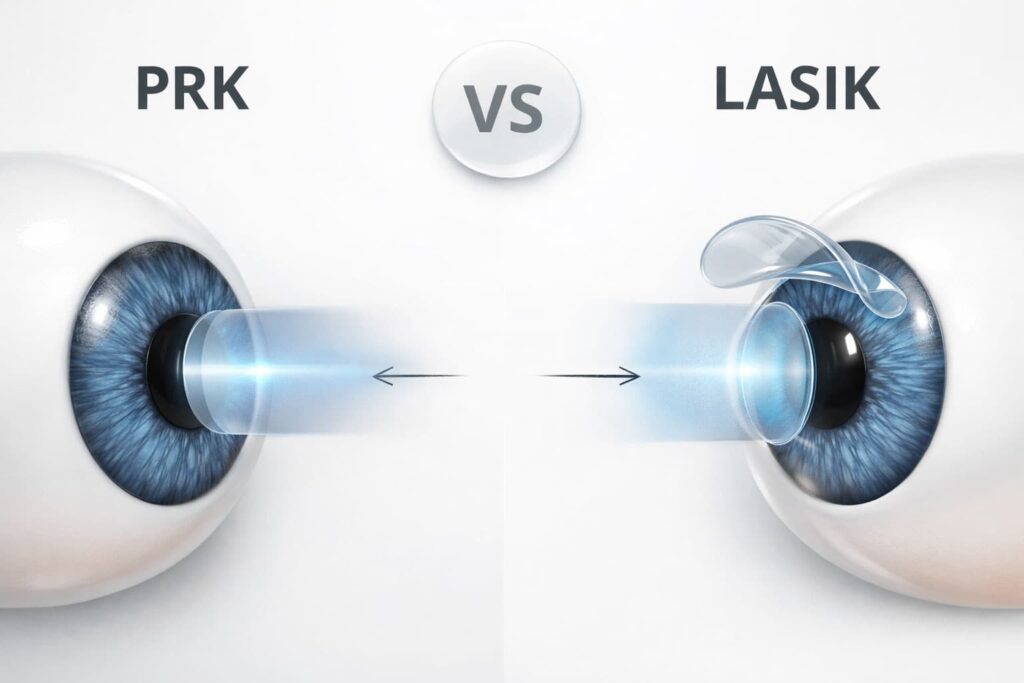
LASIK is an acronym that stands for Laser Assisted In-situ Keratomileusis and is one of the most advanced ways to permanently correct refractive errors (glasses prescriptions). LASIK surgery is performed by creating a hinged flap of tissue approximately 1/5 of the thickness of the entire cornea. This flap is gently lifted and the excimer laser is used to change the curvature of the remaining cornea to correct your prescription. Once this is completed, the flap is replaced–back into its original position. LASIK has become the most frequently performed refractive surgical procedure performed today. Its wide acceptance can be attributed to the minimal discomfort that patients experience with this procedure and the rapid visual recovery that they enjoy post-operatively. LASIK surgery can be performed using a Conventional treatment approach or a Custom treatment approach.
Advanced Surface Ablation
(Modern PRK, LASEK, epi-LASIK)
Advanced Surface Ablation (ASA) is an excimer laser vision correction technique that does not require the creation of a flap. This technique was introduced in the USA and FDA approved in 1995 as PRK (photorefractive keratectomy). As technology has advanced, PRK has evolved into what is known today as Advanced Surface Ablation.
Modern ASA has improved from its beginnings and now provides one of the most precise and predictable refractive surgery procedures available. So much so, that, until 2007, it was the only laser vision correction procedure allowed to be performed on US Military fighter pilots and NASA astronauts. It is still considered the procedure of choice for people with certain occupations and hobbies.
After your comprehensive evaluation at Parschauer Eye Center, you and your surgeon will determine which laser vision procedure is best for you.
Intralase
Advantages to Intralase® LASIK Flap Creation
- Safer, more predictable flap creation — less chance of complications in creation of flap; i.e., buttonholes, incomplete flaps, free flaps.
- Potentially more secure flap post-operatively — less susceptible to problems post-operatively.*
*Only LASIK with Intralase is permitted on US Air Force pilots, US Navy aviators, as well as NASA astronauts.
Frequently Asked Questions
LASIK is a surgical procedure and like all surgical procedures there are potential risks as well as potential limitations in outcomes:
Will I still have to wear glasses after LASIK?
With any medical procedure, there is not a guarantee of perfect vision. Almost everyone experiences improved vision, however, and most see well enough to pass a drivers’ test without corrective lenses. It is important to know that LASIK does not eliminate the need for reading glasses. Beginning at around the age of 40, a condition called presbyopia usually appears, requiring reading glasses or bifocal correction. The laser cannot correct presbyopia at this time.
Are there risks of complications from the procedure?
The procedure is very safe, and that is why it has been so readily accepted. With any surgical procedures, however, there may be complications. Vision-threatening complications do exist, but they are extremely rare. These include infections (an incidence of 1 in 5,000) and irregular healing processes that can lead to something called “irregular astigmatism” that glasses cannot correct and contact lenses or further surgery may be required to improve. There are also complications, which may lead to temporary blurriness, temporary dependence on glasses or contact lenses or a need for additional surgery. You may experience double or ghosted vision, which may go away with time. If it does not go away, enhancements may be needed after the procedure, which may or may not help this issue.
I've heard about infection, inflamation, and haze after LASIK. Is this true?
Although unlikely, infection or inflammation is possible during the healing of the cornea. This may result in permanently decreased vision. To achieve good results from the procedure, it is important to follow the doctor’s recommendations regarding post-operative medications, activities, and restrictions. Haze is not the initial blurriness immediately after treatment. True haze, that is an adverse side-effect of LASIK, may occur in the weeks and months after surgery. PRK and LASEK procedures have higher risks of haze than LASIK. Haze is difficult to treat and may result in loss of best-corrected visual acuity, including permanent loss of visual sharpness or clarity.
WIll I have problems with light after LASIK?
Vision at night could not seem as sharp as during the day. Some patients may experience night-glare, as a “starburst,” a “halo effect,” or haze around lights in the nighttime. Some degree of temporary night glare can be expected in many patients. It usually is tolerable and resolves in time, but on occasion could be permanent. Patients with high myopia or high astigmatism are at a greater risk of experiencing these problems, as are patients with large pupils. There may be an increased sensitivity to light or glare in some patients.
What is the success rate?
Success depends on several factors, the most important being the degree of nearsightedness, farsightedness or astigmatism. Depending on the prescription, the surgeon can help determine the likelihood of reaching 20/40 or greater vision. Approximately 95 percent of eyes treated with LASIK reach 20/40 or better vision with one procedure, which is the requirement for driving legally without correction. If a patient does not achieve his or her goal with one procedure, additional correction often improves their vision to a satisfactory level. LASIK does have a risk of loss of best-corrected visual acuity, but this is extremely rare. LASIK is a surgical procedure and like all surgical procedures there are potential risks, as well as potential limitations in outcomes.
Is it possible to have corneal flap complications?
There is also a small risk that patients may develop a corneal flap complication. A flap complication may require the procedure to be stopped or postponed for several months, but this is less likely with laser created flaps than with microkeratome (blade) created flaps. A relifting of the flap may be required after your original procedure for conditions such as flap striae or wrinkles, debris, epithelial in-growth, inflammation or other reasons.
I wear reading glasses now. Will I need reading glasses after LASIK?
LASIK only corrects the distance vision. If LASIK is performed such that distance glasses are not needed, and the patient is over 40, it is likely that they will need to put on a pair of glasses to read or do other near vision tasks. The exception to this is when patients opt to have monovision, when one eye is corrected fully for the distance and the other is left nearsighted. Only about 10 to 20 percent of patients opt to have monovision correction, and it is only recommended in patients who have tried it with contact lenses and liked the results.
Will my eyes be dry after LASIK?
Many patients who desire LASIK surgery already have dry eyes. They have become intolerant of their contact lenses because the dryness makes them uncomfortable. LASIK occasionally worsens dry eyes, but typically, this is temporary and usually treated with frequent artificial tear lubrication or other prescription medication. In special cases of severely dry eyes, special punctal plugs that are placed in the lower eyelid tear ducts can be inserted with a significant improvement in dryness. These are easily removed in the office once the dryness resolves, or they can be left in place permanently.
What is Keratoconus and Ectasia?
Keratoconus occurs when the cornea progressively begins to thin and bulge. Keratoconus is a degenerative corneal condition affecting vision. Keratoconus can be difficult to diagnose in its early stages. Keratoconus and laser vision correction surgery may or may not accelerate the degeneration of the cornea. You may develop keratoconus even if you do not have Laser Vision Correction surgery. The cornea could also become weakened from the thinning of laser vision correction, and begin to bulge and take on an irregular shape. This is known as ectasia. While there are several tests that suggest which patients might be at risk, these conditions can develop in patients who have a normal pre-operative profile regarding the shape and thickness of their cornea. There is no way to completely eliminate the risks of ectasia with LASIK, PRK or LASEK. Patients having LASIK are at higher risks for ectasia than patients having PRK or LASEK. The doctor may recommend PRK as a way to lower the risk of ectasia, but there is no guarantee that the condition will not develop. Keratoconus or ectasia can distort vision. Severe keratoconus or ectasia which results in vision loss, may be treatable with a corneal transplant, while mild keratoconus ectasia may be treatable with special contact lenses.
Will further treatment be necessary?
Further treatment could include a variety of eye drops, the wearing of glasses and/or contact lenses (hard or soft), or additional surgical or laser correction (enhancements). Further treatment, including hospitalization, could be necessary. If you do not follow the doctor’s orders regarding follow-up care, you may be jeopardizing the healing process or long-term health of your eye(s).
Does the equipment ever malfunction?
Though we take every precaution to make certain that our surgical and testing equipment is functioning at the highest standard, there is always the remote possibility of malfunction. However, the microkeratome or femtosecond (laser flap LASIK laser) or the excimer laser (in LASIK and PRK) could malfunction, requiring the procedure to be stopped before completion. In some instances, the malfunction may not be detected until after the procedure. Depending on the type of malfunction, this may or may not cause decreased vision results.
What are some of the other complications associated with LASIK?
As with all types of surgery, there is a possibility of complications, including those due to drug reactions. Understand that it is impossible to be informed of all potential risks of any surgery, including laser vision corrective procedures. Make certain you provide our staff with complete and up-to-date information regarding prescription and over-the-counter medications you currently take, and any drug allergies. It is imperative that you inform our doctors of any pre-existing medical conditions, including prior surgeries, degenerative conditions, active or pre-existing eye disorders. and any previous eye treatments. Complications may occur that require additional medical care, treatments, tests, medicines or surgery, and this care or surgery may be at your expense.